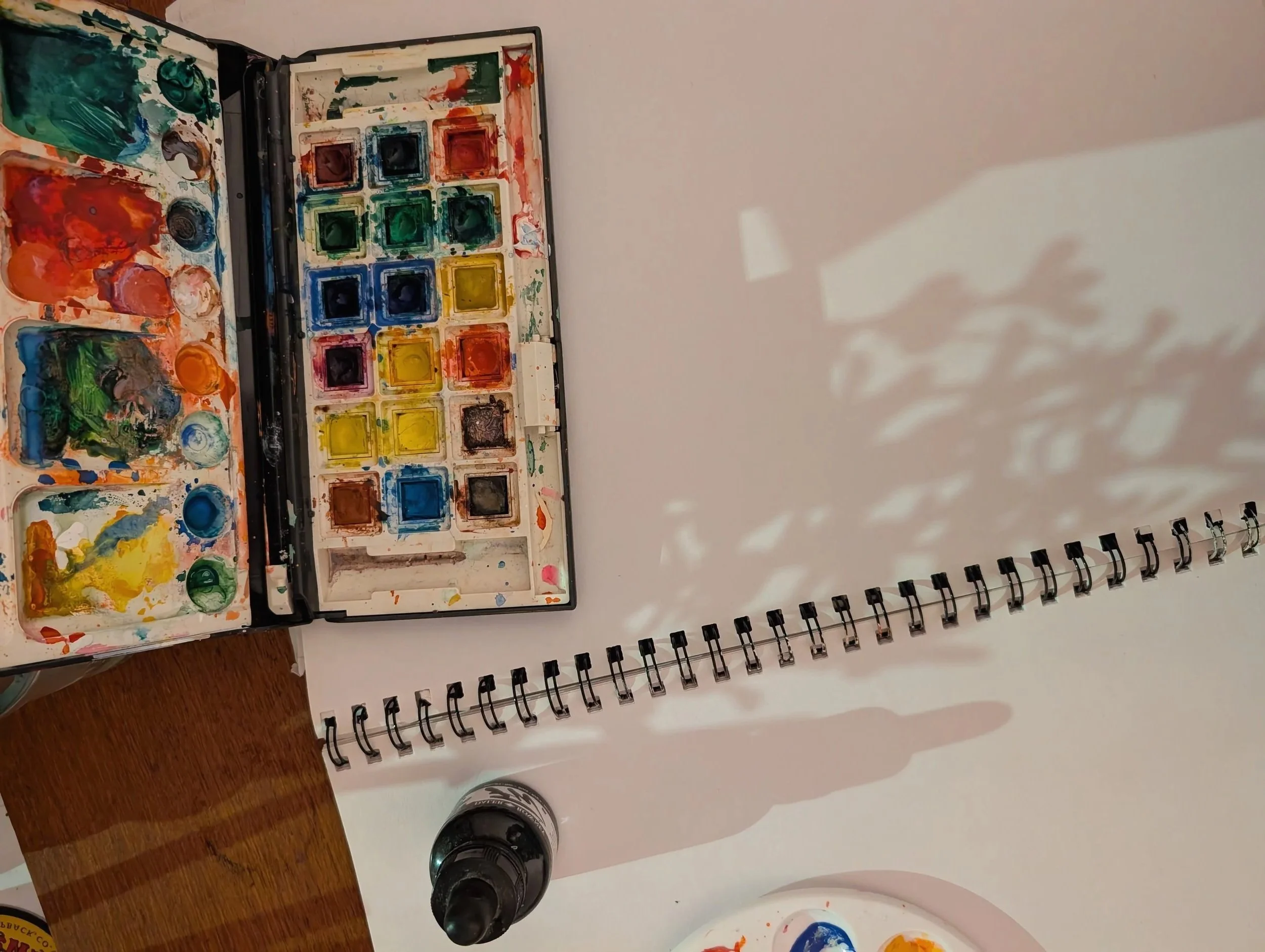
What is art therapy?
What is art therapy?
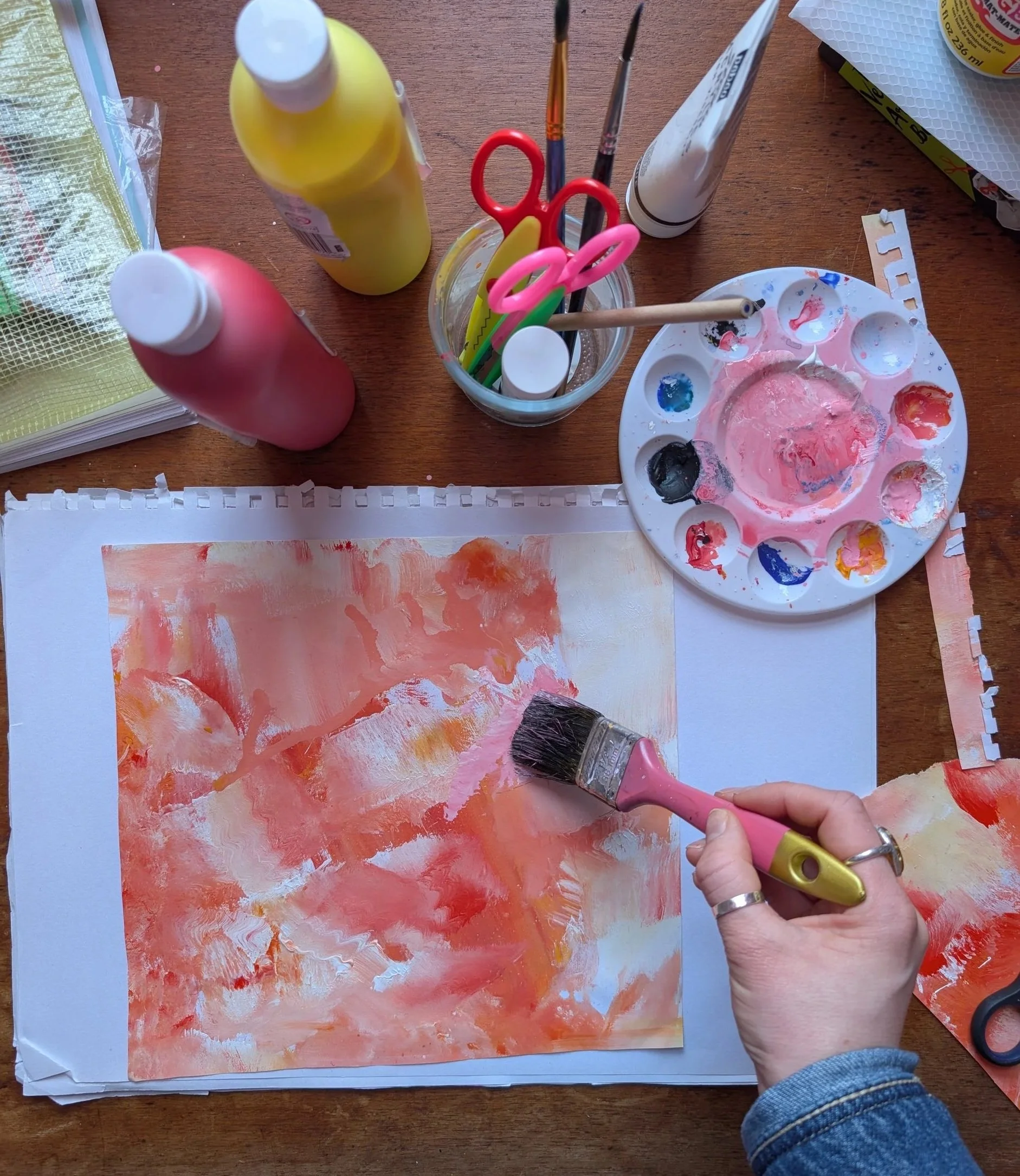
Art Therapy sessions combine creative activities such as drawing, painting, and collage, with psychodynamic and person-centred approaches. This means the process involves exploring past experiences and unconscious patterns which may support understanding of current emotions and behaviour.
Art therapy can support individuals of all ages, and you do not need any previous art making experience.
What to expect
Beginning
Therapy is different for everyone and will be tailored to your individual needs and wants. During our consultation and initial sessions we will explore what works best for you. This could mean long or short term support, a directive or non directive approach, depending on your current emotional and mental health needs. Contracting will be done together before starting, this will involve risk assessment and goals of therapy.
Exploration
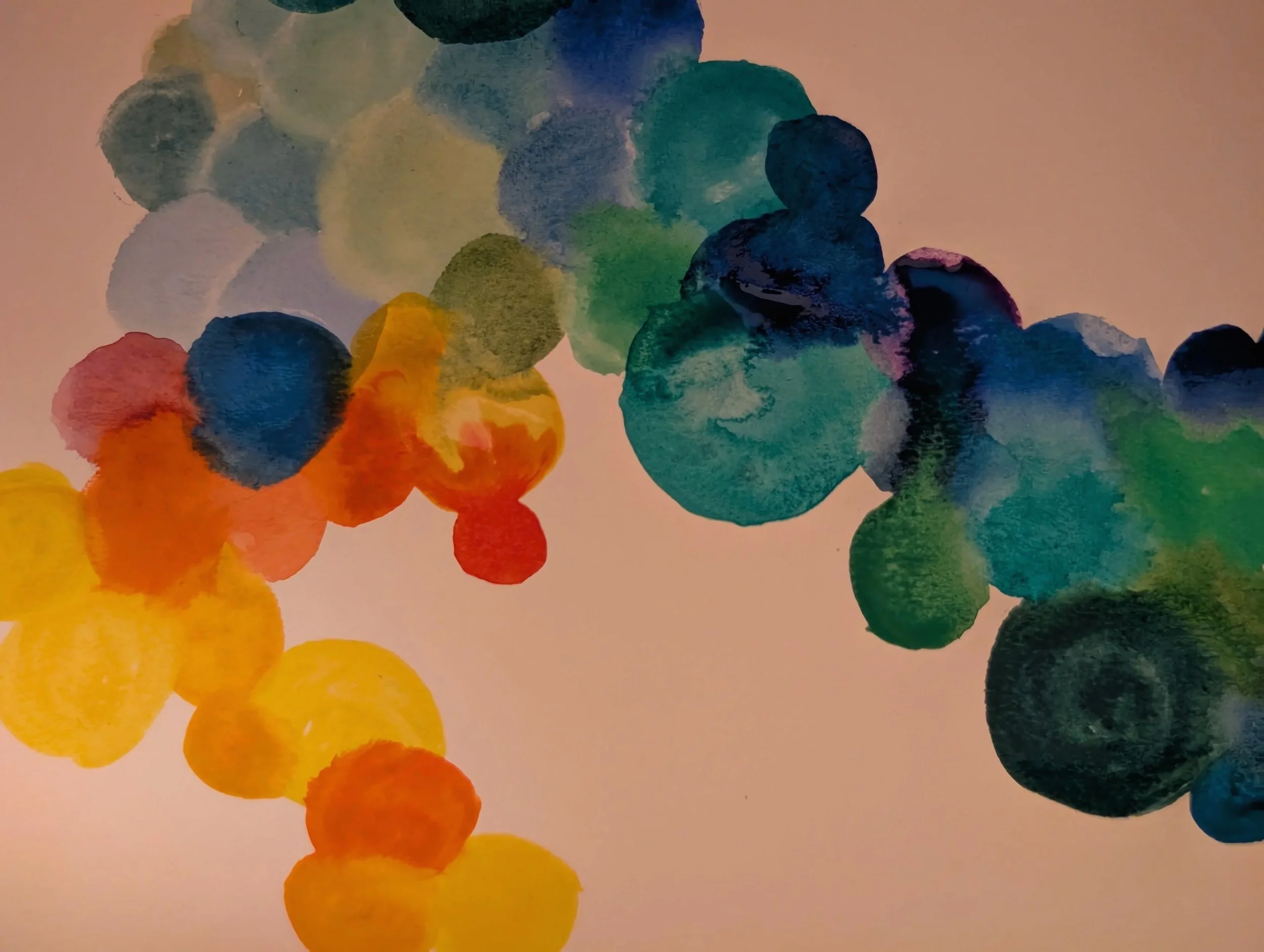
During sessions you can make art and talk, sometimes you might not want to talk, other times you might not feel like making art. There is no set way, the sessions are led by you. Together we can think and reflect on thoughts, feelings and experiences felt during the art making process or when you look at what you’ve made.
Art making can be daunting, however you do not need prior experience, just a willingness to engage with the process. Working with art materials can offer an alternative language to express your inner world. During sessions you can engage with the creative process using activities such as drawing, painting, collage, clay, and writing. Through this you will be supported to process what arises, this may be unsettling to begin with, however alongside a therapist in a contained and safe environment, this should become more familiar over time. Art therapy offers non-verbal expression, offering an alternative to traditional talk therapy.
ending
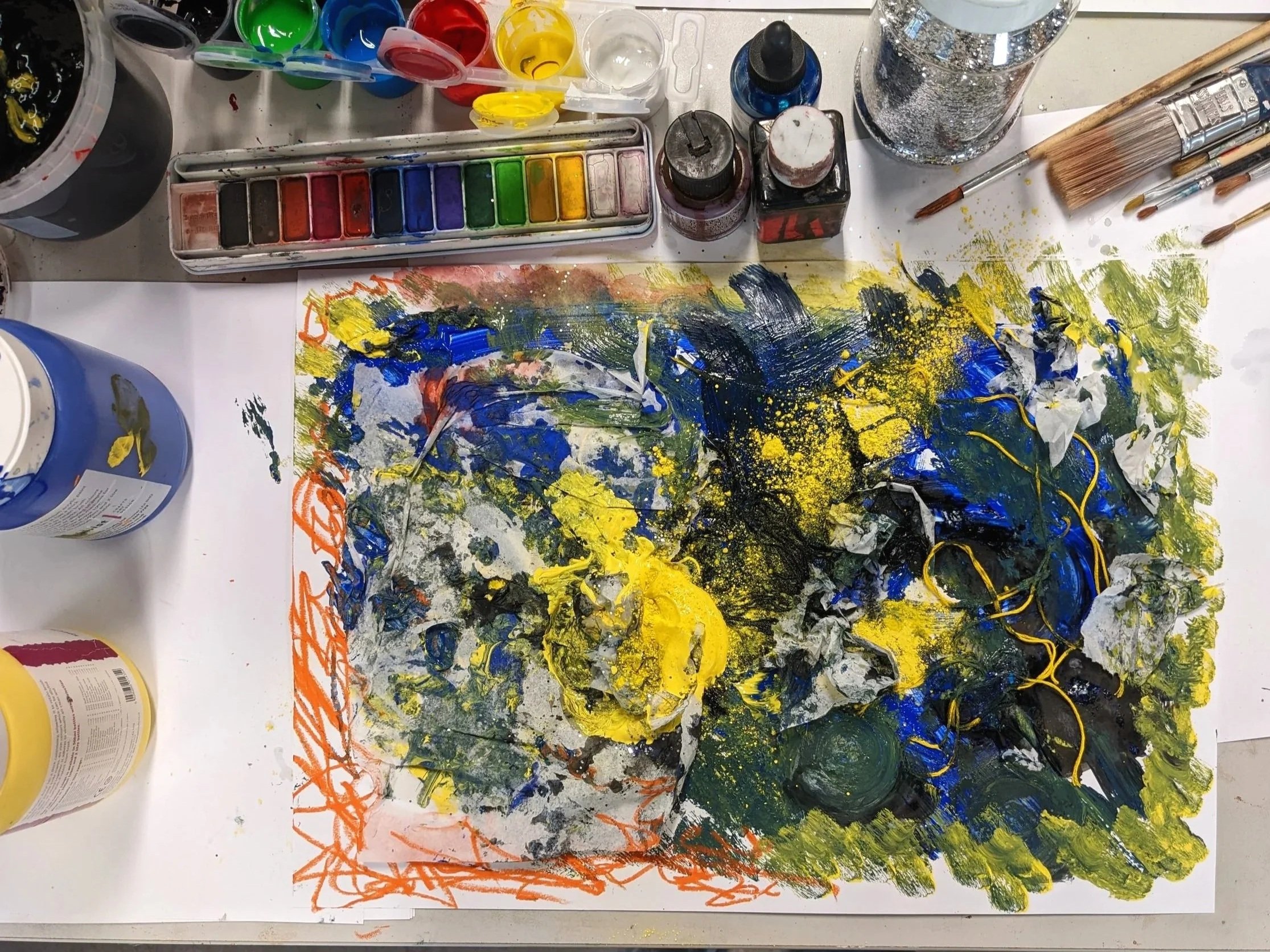
Together we will consider the duration of therapy in the initial consultation. Sometimes there are clear reasons for seeking therapy, which might impact on the duration of support. Other times things can be less clear and more exploratory. Endings can be challenging, but exploring duration is an important aspect of therapy. This is different for everyone, depending on the kind of support that suits your needs, and can be reviewed.
Art Therapy (or Art Psychotherapy) is a regulated form of psychotherapy, meaning you must be appropriately qualified and registered with the relevant regulator. For Art Therapists this is HCPC. To find out more about regulation see the resources page.
Frequently Asked Questions
-
You might be looking for a safe space to express yourself, your thoughts and emotions.
Art therapy could be suitable for you if you have been affected by difficult personal or cultural experiences, illness and/or disability, which may be challenging to talk about.
Art therapy is an evidence based form of psychotherapy. It can offer a creative and exploratory space. By engaging with art making, the nervous system and stress can be regulated, along with greater understanding of our experiences and self.
-
I offer individual art therapy sessions, these are in person in Leith, Edinburgh.
I also offer creative community workshops in Edinburgh.
-
I offer sessions of 50 minutes, however this can be discussed and decided on an individual basis, depending on what works for you.
-
I offer sessions at £55, which can be paid via bank transfer.
For clients within marginalized backgrounds a sliding scale is available, which can be discussed during initial consultation.
-
All sessions are private and confidential. However, if a concern arises about the safety or wellbeing of yourself or others, information may need to be shared with relevant professionals to ensure appropriate safeguarding. Wherever possible, this will be discussed with you first.
When working with children, some communication with parents or primary carers is usually necessary. While most of the therapy remains confidential, information may occasionally be shared when it is considered to be in the best interests of the child. This will be discussed with the child where appropriate and may also involve other professionals involved in the child’s care, in line with the Scottish Government guidelines in the GIRFEC model.
-
Anti-oppressive practice is an approach which recognises how social systems can shape people’s experiences, wellbeing and access to power.
In terms of my art therapy practice this means using a feminist approach, working collaboratively, transparently, valuing lived experience and knowledge.
In my practice I seek to provide a safe, inclusive and empowering space where creativity can be used as a tool for reflection, healing and social awareness.
-
Artwork made during sessions will be stored confidentially within the premises.
Once therapy comes to an end, it’s your decision what you would like to do with the artwork.